

How Does Ivermectin Work?
Ivermectin is a prescription antiparasitic medicine that has been used for decades to treat several parasitic infections in humans. It is recognized globally for its effectiveness against specific parasites and has played an important role in public health programs aimed at controlling neglected tropical diseases.
Many people searching “How Does Ivermectin Work” want to understand why this medicine is effective against parasites, how it interacts with the body, and which conditions it is approved to treat. Understanding its mechanism of action helps explain both its benefits and its limitations.
According to the World Health Organization (WHO) Essential Medicines List, ivermectin remains an important medicine for treating certain parasitic diseases when used for approved medical indications.
What Is Ivermectin?
Ivermectin belongs to a group of medicines known as anthelmintics, commonly referred to as antiparasitic medicines. It is prescribed to treat infections caused by certain parasites rather than bacteria or viruses.
Since its introduction in human medicine, ivermectin has helped reduce the burden of diseases affecting millions of people worldwide. Depending on the diagnosis, it may be prescribed as oral tablets or topical formulations.
If you are new to this medicine, you may also find our guide on What Is Ivermectin Used For? helpful for understanding the conditions it is approved to treat.
How Does Ivermectin Work?
The effectiveness of ivermectin comes from its ability to interfere with the nervous system of susceptible parasites.
Many parasitic worms possess specialized proteins called glutamate-gated chloride channels. These channels regulate nerve impulses that control movement, feeding, and survival.
After ivermectin binds to these channels, chloride ions enter parasite nerve and muscle cells in excessive amounts. This disrupts normal electrical signaling and causes the parasite to become paralyzed.
Once immobilized, the parasite can no longer feed, reproduce, or maintain essential biological functions. The body’s immune system then helps remove the affected organisms.
One reason ivermectin has a favorable safety profile is that humans do not possess these glutamate-gated chloride channels in the same form as susceptible parasites, making the medicine highly selective when used at recommended doses.
Why Is Ivermectin Effective Against Parasites?
Parasites depend on continuous nerve and muscle activity for survival.
Without coordinated movement, they cannot:
- attach to tissues
- obtain nutrients
- reproduce normally
- avoid the host’s immune response
By disrupting these essential biological processes, ivermectin effectively weakens susceptible parasites until they are eliminated.
Its effectiveness depends on several important factors:
- the parasite species
- the severity of infection
- timing of treatment
- correct dosage
- the patient’s overall health
Not every parasite responds to ivermectin, which is why healthcare professionals base treatment decisions on an accurate diagnosis rather than symptoms alone.
Approved Medical Uses
Regulatory agencies approve ivermectin for specific parasitic infections.
Common approved indications include:
Strongyloidiasis
Strongyloidiasis is caused by the intestinal parasite Strongyloides stercoralis. Clinical guidelines commonly recommend ivermectin as a first-line treatment for uncomplicated infections.
Onchocerciasis (River Blindness)
Ivermectin has significantly contributed to international programs that control river blindness by reducing the number of immature parasites responsible for disease transmission.
Certain Cases of Scabies
Depending on national treatment guidelines and individual patient circumstances, healthcare professionals may prescribe oral ivermectin for certain cases of scabies, particularly when topical therapy is not appropriate.
For additional information about approved human uses, read our Human Use of Ivermectin and Treatment Guides articles.
Information regarding approved prescribing indications can also be found through the U.S. Food and Drug Administration (FDA) prescribing information, which provides guidance on approved human uses, dosing considerations, contraindications, and safety information.
Why Ivermectin Does Not Treat Every Infection
Although ivermectin is highly effective against specific parasites, it is important to understand its limitations.
Ivermectin is not an antibiotic, meaning it does not kill bacteria responsible for bacterial infections.
Likewise, it is not an established antiviral medicine. Recommendations for any use beyond approved indications should rely on high-quality clinical evidence and guidance from qualified healthcare professionals.
Readers interested in current scientific research can explore peer-reviewed studies available through PubMed, maintained by the U.S. National Library of Medicine, where ongoing research and systematic reviews are indexed.
Benefits of Ivermectin
When prescribed appropriately for approved conditions, ivermectin offers several important advantages.
These include:
- Proven effectiveness against several parasitic infections
- Extensive clinical experience spanning decades
- Convenient oral administration for many patients
- Well-established role in global disease-control programs
- Generally favorable safety profile when used according to medical advice
Like all prescription medicines, however, ivermectin should only be used when clinically appropriate after evaluation by a qualified healthcare professional.
Safety Considerations
Safe use begins with an accurate diagnosis.
Patients should:
- take ivermectin exactly as prescribed
- avoid taking veterinary formulations intended for animals
- inform healthcare providers about all current medications
- discuss pregnancy or breastfeeding before treatment
- report liver disease or neurological disorders before starting therapy
For more detailed guidance, see our Ivermectin Safety and Precautions and Ivermectin Dosage Guide articles.
Why Ivermectin Is Selective for Parasites
One of the reasons ivermectin has remained an important treatment for parasitic diseases is its selective mechanism of action. The medicine targets glutamate-gated chloride channels, which are found in many parasitic worms and some external parasites but are not present in the same form in human cells.
At recommended therapeutic doses, ivermectin has limited penetration into the central nervous system because the blood-brain barrier helps prevent significant amounts of the drug from reaching the brain. This contributes to its favorable safety profile when prescribed correctly.
Although ivermectin is generally well tolerated, no medicine is completely free from risk. Appropriate prescribing, patient selection, and medical supervision remain essential.
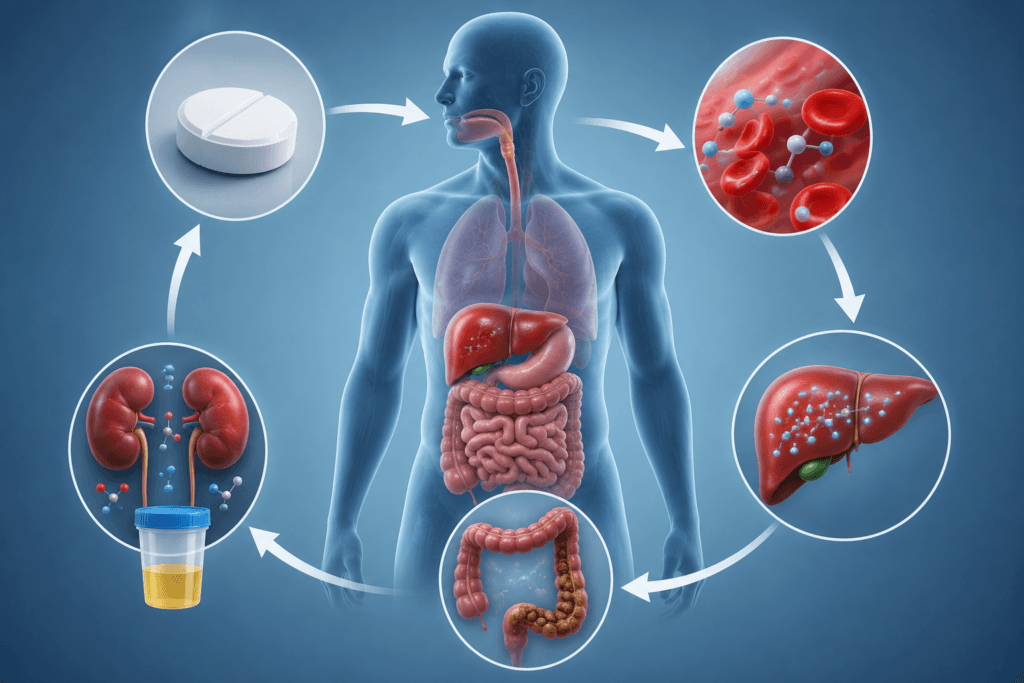
How the Body Processes Ivermectin
Understanding how ivermectin is absorbed, distributed, metabolized, and eliminated helps explain why healthcare professionals prescribe specific doses and treatment schedules.
Absorption
After an oral dose is taken, ivermectin is absorbed through the gastrointestinal tract into the bloodstream. The extent of absorption may vary depending on factors such as food intake and the formulation prescribed. Patients should always follow the dosing instructions provided by their healthcare professional.
Distribution
Once absorbed, ivermectin circulates throughout the body and reaches tissues where susceptible parasites may be present. It binds strongly to plasma proteins, which influences how it is distributed before being gradually metabolized.
Metabolism
The liver is responsible for breaking down ivermectin. It is primarily metabolized through the cytochrome P450 enzyme system, particularly CYP3A4.
Because several medicines can affect these enzymes, healthcare providers review a patient’s medication history before prescribing ivermectin to reduce the risk of clinically significant drug interactions.
Elimination
Most ivermectin is eliminated through the feces, while only a small proportion leaves the body through urine.
The time required for complete elimination varies between individuals and may be influenced by liver function, age, overall health, and concurrent medications.
Which Conditions Is Ivermectin Approved to Treat?
Health authorities around the world approve ivermectin for several parasitic infections. Exact approvals may differ by country, but commonly recognized indications include:
- Strongyloidiasis
- Onchocerciasis (river blindness)
- Certain cases of scabies
- Other parasitic infections according to national treatment guidelines
Healthcare professionals determine whether ivermectin is appropriate after considering:
- the confirmed diagnosis
- laboratory findings
- severity of infection
- age
- body weight
- underlying medical conditions
For more information, readers may also refer to our What Is Ivermectin Used For? and Human Use of Ivermectin guides.
Possible Side Effects
Most patients tolerate ivermectin well when it is used for approved indications. However, like all prescription medicines, side effects may occur.
Common Side Effects
Some of the more frequently reported side effects include:
- Headache
- Dizziness
- Nausea
- Diarrhea
- Fatigue
- Mild skin rash
- Itching
Many of these reactions are mild and resolve without additional treatment. However, patients should contact a healthcare professional if symptoms persist or worsen.
Detailed safety information is also available through the MedlinePlus Drug Information database, which provides patient-friendly guidance on approved medicines, including common adverse effects and precautions.
Less Common but Serious Adverse Reactions
Serious side effects are uncommon but require immediate medical attention if they occur.
Examples include:
- Severe allergic reactions
- Difficulty breathing
- Significant swelling of the face or throat
- Persistent confusion
- Vision changes
- Severe skin reactions
- Loss of consciousness
Anyone experiencing symptoms suggestive of a serious allergic reaction should seek emergency medical care immediately.
Drug Interactions
Ivermectin may interact with other medicines. For this reason, patients should always provide a complete list of prescription medications, over-the-counter medicines, vitamins, and herbal supplements before beginning treatment.
Examples of medicines that may require additional monitoring include:
- Blood-thinning medicines
- Certain anticonvulsants
- Medicines that affect liver enzymes
- Some immunosuppressive therapies
The presence of a potential interaction does not necessarily mean ivermectin cannot be used. Instead, healthcare professionals evaluate the overall benefits and risks for each individual patient.
For additional guidance, readers can visit our Ivermectin Safety and Precautions article.
Who Should Use Extra Caution?
Additional medical assessment may be necessary for individuals who:
- Have liver disease
- Have significant neurological disorders
- Are pregnant or breastfeeding
- Have previously experienced an allergic reaction to ivermectin
- Take multiple prescription medicines
- Have compromised immune function
Treatment decisions should always be individualized rather than based on general information alone.
Human vs. Veterinary Ivermectin
Human ivermectin products are manufactured according to standards designed specifically for people.
Veterinary formulations intended for livestock or companion animals may contain different concentrations, inactive ingredients, or dosing strengths that are not appropriate for human use.
Major regulatory authorities advise against using veterinary ivermectin products in humans because doing so may increase the risk of overdose or other serious adverse effects.
Current Clinical Evidence
Ivermectin has an extensive history of use for approved parasitic infections, supported by decades of clinical research and public health experience.
Researchers continue to investigate ivermectin for additional potential applications. However, when evaluating any proposed use beyond approved indications, it is important to distinguish between laboratory findings, observational studies, and well-designed randomized controlled trials.
Evidence from laboratory or early-stage research does not automatically demonstrate clinical effectiveness in humans. Healthcare recommendations should be based on the totality of high-quality evidence rather than isolated studies.
Readers interested in reviewing systematic evidence summaries can consult the Cochrane Library, which publishes independent systematic reviews evaluating the effectiveness and safety of healthcare interventions.
Regulatory Guidance
Several international organizations publish guidance regarding the appropriate use of ivermectin.
World Health Organization (WHO)
The WHO recognizes ivermectin as an important medicine for specific neglected tropical diseases and supports its use within established treatment programs for approved indications.
U.S. Food and Drug Administration (FDA)
The FDA approves ivermectin for certain human parasitic infections and advises patients to use it only under the supervision of a qualified healthcare professional for approved uses.
European Medicines Agency (EMA)
The EMA similarly recommends that ivermectin be used according to approved indications and emphasizes that decisions regarding new therapeutic uses should rely on robust scientific evidence generated through appropriate clinical research.
Practical Advice for Patients
If ivermectin has been prescribed for you:
- Follow the prescribed dosage exactly.
- Do not increase or repeat doses without medical advice.
- Inform your healthcare provider about all medicines and supplements you use.
- Attend recommended follow-up appointments if required.
- Report unexpected or persistent side effects promptly.
- Never substitute veterinary ivermectin products for medicines intended for human use.
Patients who have questions about treatment should discuss them directly with their prescribing clinician.
Looking for more information? Read our Ivermectin Medication Facts guide to learn about approved uses, safety information, possible side effects, precautions, dosage considerations, and important patient guidance for responsible use.
Frequently Asked Questions
1. How does ivermectin work against parasites?
Ivermectin works by binding to glutamate-gated chloride channels found in many parasites. This disrupts nerve and muscle function, causing paralysis and allowing the body’s immune system to eliminate the affected organisms.
2. Is ivermectin an antibiotic?
No. Ivermectin is an antiparasitic medicine. It is designed to treat certain infections caused by parasites rather than bacteria.
3. Is ivermectin an antiviral medicine?
Ivermectin is not approved as an antiviral medicine. Its established clinical use is for specific parasitic infections according to approved medical guidelines.
4. Which diseases is ivermectin approved to treat?
Depending on national regulatory approvals, ivermectin may be prescribed for:
- Strongyloidiasis
- Onchocerciasis (River Blindness)
- Certain cases of scabies
- Other approved parasitic infections
Treatment decisions should always be made by a qualified healthcare professional.
5. How long does ivermectin stay in the body?
Ivermectin is gradually eliminated after it has been metabolized by the liver. The exact duration varies depending on age, liver function, overall health, dosage, and other individual factors.
6. Can ivermectin cause side effects?
Yes. Although most people tolerate ivermectin well when prescribed appropriately, possible side effects include:
- Headache
- Nausea
- Dizziness
- Fatigue
- Mild rash
- Diarrhea
Serious reactions are uncommon but require immediate medical attention.
7. Who should not take ivermectin without medical advice?
Individuals should consult a healthcare professional before taking ivermectin if they:
- Are pregnant or breastfeeding
- Have liver disease
- Have neurological disorders
- Take multiple prescription medications
- Have experienced an allergic reaction to ivermectin previously
8. Can ivermectin interact with other medicines?
Yes. Certain medicines may alter how ivermectin is metabolized or increase the likelihood of adverse effects. Always inform your healthcare provider about all prescription medicines, over-the-counter products, vitamins, and herbal supplements you use.
9. Why is veterinary ivermectin not suitable for people?
Veterinary products are formulated for animals and may contain different concentrations or inactive ingredients that have not been evaluated for human use. They should never be substituted for medicines intended for people.
10. Why is an accurate diagnosis important?
Many illnesses share similar symptoms. Identifying the actual cause of an infection helps ensure that the most appropriate treatment is selected while avoiding unnecessary medicines or delays in receiving effective care.
11. Where can I learn more about ivermectin safety?
Reliable information is available from recognized public health organizations and regulatory agencies. For patient-friendly guidance, visit the National Institutes of Health’s MedlinePlus or consult your healthcare provider.
12. Where can I find scientific studies about ivermectin?
Researchers and healthcare professionals often use PubMed, maintained by the U.S. National Library of Medicine, to access peer-reviewed medical literature on ivermectin and many other medicines.
Key Takeaways
- Ivermectin is a prescription antiparasitic medicine with established effectiveness against several parasitic infections.
- Its mechanism of action targets glutamate-gated chloride channels found in susceptible parasites, leading to paralysis and elimination.
- Human cells are much less affected because these channels are not present in the same form.
- Approved uses differ between countries and should always follow national regulatory guidance.
- Like all prescription medicines, ivermectin has potential side effects and drug interactions that require medical supervision.
- Reliable treatment decisions should be based on high-quality clinical evidence and guidance from qualified healthcare professionals.
Conclusion
Understanding how ivermectin works helps explain why it remains an important medicine for treating certain parasitic diseases around the world. Its selective action against parasite nerve and muscle cells has made it an effective option for approved indications while maintaining a generally favorable safety profile when prescribed appropriately.
Although ivermectin has been studied extensively, it is important to distinguish between well-established clinical uses and areas where research is still evolving. Healthcare decisions should always be guided by qualified medical professionals, current clinical guidelines, and evidence from high-quality scientific studies.
These articles provide additional information to help patients better understand approved treatments, safety considerations, and evidence-based healthcare decisions.