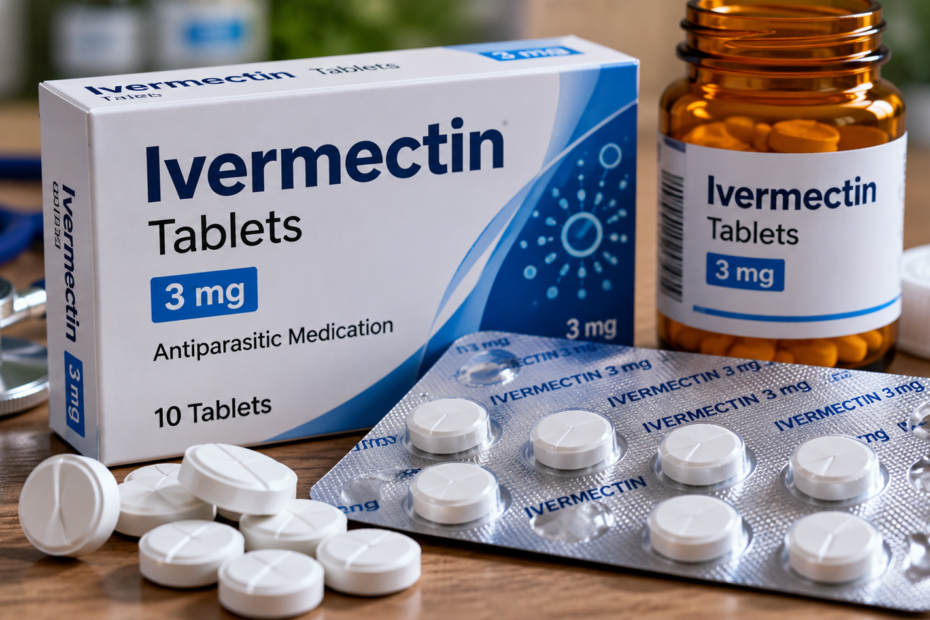
Introduction
Ivermectin is one of the most widely discussed antiparasitic medications in modern medicine. While it has been safely used for decades in treating specific parasitic infections, public discourse in recent years has significantly increased confusion around its proper role in healthcare.
According to the World Health Organization, ivermectin remains an essential medicine for certain parasitic diseases and has contributed to large-scale disease control programs globally
However, misinformation and inconsistent online claims have led many people to misunderstand its approved uses, safety profile, and limitations.
This article provides a comprehensive, evidence-based breakdown of ivermectin medication facts, including how it works, what it is approved for, safety considerations, side effects, and what current medical science actually supports.
Readers will gain a clear, research-based understanding grounded in guidance from trusted institutions such as the CDC, NIH, Mayo Clinic, and Cleveland Clinic.
Understanding the Science Behind Ivermectin
What Is Ivermectin?
Ivermectin is an antiparasitic medication derived from natural compounds originally discovered in bacteria. It belongs to a class of drugs designed to treat infections caused by parasites rather than viruses or bacteria.
The U.S. National Institutes of Health (NIH) classifies ivermectin as an important antiparasitic agent used primarily for helminthic and ectoparasitic infections
How Ivermectin Works in the Body
Ivermectin works by interfering with the nerve and muscle function of parasites. It binds to specific chloride channels that are essential for parasite survival. This leads to paralysis and eventual elimination of the organism.
Importantly, human cells do not contain the same targeted channels in the same form, which is why ivermectin can selectively affect parasites when used appropriately.
Key Medical Concepts
- Antiparasitic agent: A drug that kills or inhibits parasites
- Helminths: Worm-like parasites
- Ectoparasites: Parasites living on the skin (e.g., lice, mites)
- Strongyloides stercoralis: A parasitic worm causing strongyloidiasis
- Onchocerciasis: A parasitic disease also known as river blindness
Why Ivermectin Matters in Modern Healthcare
Global Disease Control Impact
Ivermectin has played a major role in reducing the burden of parasitic diseases in low-resource regions. Large-scale distribution programs have helped reduce infection rates for diseases such as river blindness.
The CDC recognizes ivermectin as a cornerstone therapy in controlling certain neglected tropical diseases
Quality of Life Improvements
Untreated parasitic infections can lead to:
- Chronic fatigue
- Nutritional deficiencies
- Skin irritation and infection
- Gastrointestinal symptoms
- Vision impairment (in severe cases)
Proper treatment with ivermectin, when clinically indicated, can significantly improve patient outcomes and prevent long-term complications.
Preventive Healthcare Context
While ivermectin is not a preventive supplement, its role in controlling infectious parasitic diseases contributes indirectly to population-level prevention strategies in endemic regions.
Approved Medical Uses of Ivermectin
1. Strongyloidiasis
Strongyloidiasis is an intestinal parasitic infection. Ivermectin is considered a first-line treatment in many clinical guidelines due to its effectiveness.
The Mayo Clinic notes ivermectin as a standard treatment option for certain parasitic worm infections
2. Onchocerciasis (River Blindness)
Ivermectin is widely used in mass treatment programs to reduce disease transmission and severity.
The World Health Organization continues to support ivermectin distribution in endemic regions
3. Scabies
In some cases, particularly severe or institutional outbreaks, ivermectin may be prescribed when topical treatments are insufficient.
4. Head Lice
Certain ivermectin-based formulations are approved for treating lice infestations.
Important Clinical Note
Ivermectin should only be used under medical supervision and for approved conditions. Self-medication is not recommended.

Safety Information Patients Should Know
Prescription-Only Importance
Correct dosing of ivermectin depends on:
- Body weight
- Type of infection
- Patient age
- Medical history
- Liver function
The Cleveland Clinic emphasizes the importance of individualized dosing under healthcare supervision
Who Requires Extra Caution?
Medical professionals exercise caution in:
- Pregnant or breastfeeding individuals
- Patients with liver disease
- Young children
- Elderly patients
- Individuals taking multiple medications
Drug Interactions
Ivermectin may interact with medications that affect:
- Central nervous system activity
- Liver enzyme metabolism
- Sedative effects
Patients should always disclose all medications and supplements to their healthcare provider.
Side Effects of Ivermectin
Common Side Effects
Most side effects are mild and temporary:
- Dizziness
- Nausea
- Fatigue
- Diarrhea
- Headache
- Mild skin irritation
Less Common Effects
- Low blood pressure
- Muscle pain
- Abdominal discomfort
- Increased heart rate
Serious Reactions (Rare)
Seek medical attention if symptoms include:
- Severe allergic reactions
- Neurological changes
- Vision disturbances
- Difficulty breathing
- Severe rash or swelling
The NIH emphasizes that serious adverse reactions are rare when ivermectin is used correctly
Common Myths and Misconceptions
Myth 1: Ivermectin Treats All Diseases
There is no scientific evidence supporting ivermectin as a treatment for viral infections or unrelated conditions.
Myth 2: Higher Doses Improve Effectiveness
Overdosing increases toxicity risk without improving outcomes.
Myth 3: Veterinary Ivermectin Is Safe for Humans
Veterinary formulations are not designed for human use and may contain unsafe concentrations or additives.
Myth 4: Online Anecdotes Equal Clinical Evidence
Medical guidance is based on controlled studies, not individual testimonials.
What Current Research Shows
Established Medical Consensus
There is strong scientific consensus supporting ivermectin’s use for approved parasitic infections.
Ongoing Research Areas
- Resistance patterns in parasites
- Optimized dosing strategies
- Expanded antiparasitic applications
- Public health implementation strategies
Research Limitations
Medical research is continuously evolving, and results must always be interpreted within the context of clinical guidelines and peer-reviewed consensus.
Practical Applications for Patients
Before Use
Patients should:
- Receive a confirmed diagnosis
- Review medical history
- Discuss allergies and medications
- Follow professional guidance
During Treatment
- Take medication exactly as prescribed
- Monitor for side effects
- Maintain hydration
- Avoid self-adjusting dosage
After Treatment
- Follow up with healthcare provider
- Complete any required testing
- Monitor for recurrence if applicable
Expert Medical Perspectives
Infectious Disease Experts
Specialists emphasize ivermectin’s importance in treating parasitic infections when used appropriately.
Public Health Authorities
Organizations like WHO and CDC highlight ivermectin’s role in reducing disease burden in endemic regions.
Functional and Preventive Medicine
From a broader wellness perspective, experts emphasize that infection control is only one part of long-term health, alongside:
- Nutrition optimization
- Sleep quality improvement
- Stress regulation
- Immune system support
- Physical activity
After explaining the ivermectin mechanism → Ivermectin Cancer Treatment (2026): What Current Research, Risks & Medical Experts Reveal
Future Outlook
The future of antiparasitic treatment, including ivermectin research, is likely to involve:
- Precision medicine approaches
- Improved diagnostic tools
- Resistance monitoring systems
- Enhanced global distribution programs
- AI-assisted public health modeling
Advances in medical research will continue refining how antiparasitic therapies are used within modern healthcare systems.
Conclusion
Ivermectin remains an important and well-established antiparasitic medication with a strong safety record when used appropriately under medical supervision.
However, its effectiveness is limited to specific parasitic conditions, and it should not be misunderstood as a universal treatment.
Reliable medical information from institutions such as the WHO, CDC, NIH, Mayo Clinic, and Cleveland Clinic consistently reinforces the importance of evidence-based use and professional medical guidance.
Ultimately, the most important ivermectin medication facts are grounded in science: correct diagnosis, appropriate prescribing, and responsible use are essential for safety and effectiveness.
FAQ
What is ivermectin used for?
Primarily for parasitic infections such as strongyloidiasis, scabies, lice, and river blindness.
Is ivermectin safe?
Yes, when prescribed appropriately and used under medical supervision.
Can ivermectin treat viral infections?
No credible clinical evidence supports this use.
What are the most common side effects?
Dizziness, nausea, headache, fatigue, and mild gastrointestinal symptoms.
Can ivermectin be taken without a prescription?
No. It should only be used under healthcare supervision.
Why is ivermectin controversial?
Public misinformation and off-label discussions have contributed to confusion.
Where can I find reliable information?
Trusted sources include WHO, CDC, NIH, Mayo Clinic, and Cleveland Clinic.