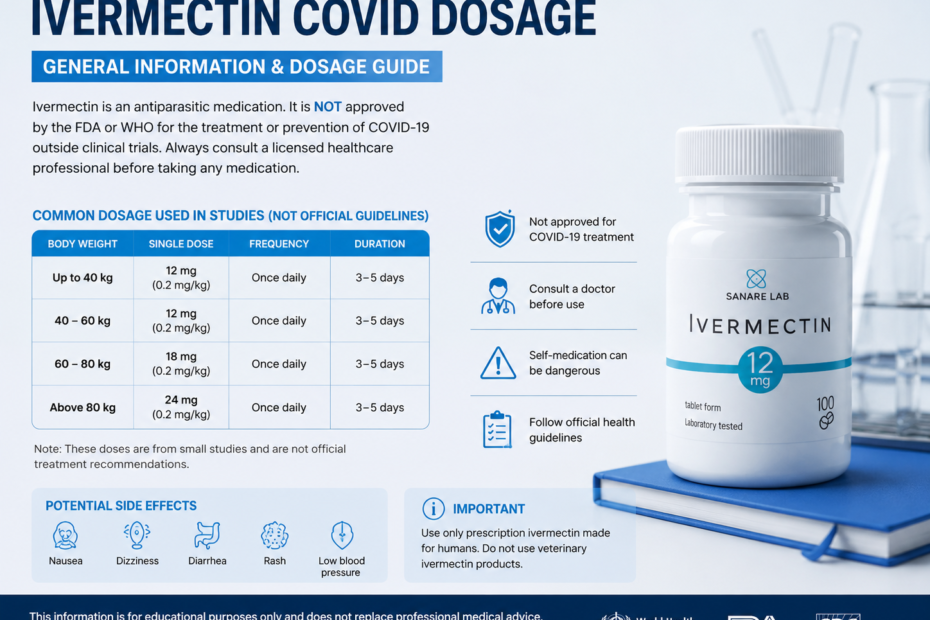
Interest in ivermectin COVID dosage surged during the pandemic after online discussions, social media claims, and early experimental studies suggested possible antiviral effects. However, major health organizations now emphasize that ivermectin is not approved for treating or preventing COVID-19 outside specific clinical situations.
This guide explains:
- What ivermectin is
- Why it became controversial
- What research says today
- Safety concerns
- Current medical recommendations
- Risks of self-medication
The goal is to provide an evidence-based overview that aligns with current scientific consensus and medical safety standards.
What Is Ivermectin?
Ivermectin is an antiparasitic medication used to treat certain infections caused by parasites.
Approved medical uses include:
- River blindness
- Strongyloidiasis
- Scabies (in some cases)
- Certain parasitic infections
According to the U.S. Food and Drug Administration (FDA), ivermectin is approved for specific human and veterinary uses — but not as a general COVID-19 treatment. (fda.gov)
👉 Internal Link Suggestion:
Understanding Ivermectin: General Information & Medication Awareness Guide
Why Did Ivermectin Become Linked to COVID-19?
Early laboratory studies showed ivermectin could affect viral replication under certain experimental conditions. However, later research found that the concentrations required in humans would likely exceed safe dosing levels.
During the pandemic:
- Social media amplified early findings
- Anecdotal claims spread rapidly
- Some low-quality studies circulated online
- Larger clinical trials later failed to confirm clear benefits
Major public health agencies reviewed the evidence and concluded that routine use for COVID-19 is not supported by strong scientific proof.
Helpful Medical Sources
Current Medical Guidance on Ivermectin COVID Dosage
Health authorities including:
- The FDA
- WHO
- NIH
- European Medicines Agency (EMA)
state that ivermectin should not be routinely used for COVID-19 treatment outside clinical trials or physician-supervised situations.
According to the NIH COVID-19 Treatment Guidelines, evidence remains insufficient to recommend ivermectin as a standard COVID treatment. (covid19treatmentguidelines.nih.gov)
Why Self-Medicating With Ivermectin Can Be Dangerous
One of the biggest concerns surrounding ivermectin COVID dosage is unsupervised self-medication.
Potential risks include:
- Incorrect dosing
- Toxicity
- Drug interactions
- Neurological side effects
- Liver complications
The FDA has repeatedly warned against using veterinary ivermectin products intended for animals such as horses or livestock. (fda.gov)
Potential Side Effects of Ivermectin
Reported side effects may include:
- Nausea
- Vomiting
- Dizziness
- Diarrhea
- Skin rash
- Low blood pressure
In higher or inappropriate doses, more serious complications can occur:
- Confusion
- Seizures
- Loss of coordination
- Severe neurological symptoms
Experts warn that misuse increases the likelihood of adverse reactions.
What Studies Say About Ivermectin and COVID-19
Research results have been mixed over the years, but larger and higher-quality studies generally failed to show consistent clinical benefit.
Several reviews concluded:
- Evidence quality was low in many early studies
- Some studies were later withdrawn or questioned
- No strong consensus supports routine COVID treatment use
A 2024 evidence review published in major medical analyses found insufficient evidence for widespread recommendation.
👉 Internal Link Suggestion:
Ivermectin Guide USA: Uses, Benefits, Dosage, Safety & Important Medical Information
Approved COVID-19 Treatments Today
Modern COVID-19 management may include:
- Antiviral medications
- Symptom management
- Supportive care
- Vaccination
- Physician-supervised therapies
Current approved treatment options vary depending on:
- Age
- Risk factors
- Immune status
- Severity of illness
For updated treatment guidance, consult:
Why Accurate Medical Information Matters
COVID-related misinformation spread rapidly online during the pandemic. Medical experts stress the importance of relying on:
- Peer-reviewed studies
- Trusted health organizations
- Licensed medical professionals
- Evidence-based recommendations
Search engines now prioritize medically reviewed, trustworthy health content under Google’s E-E-A-T guidelines (Experience, Expertise, Authoritativeness, Trustworthiness).
Key Takeaways About Ivermectin COVID Dosage
- Ivermectin is primarily an antiparasitic medication
- It is not broadly approved for COVID-19 treatment
- Major health agencies do not recommend self-medication
- Veterinary ivermectin products can be dangerous for humans
- Always seek professional medical guidance for COVID-related care
Frequently Asked Questions (FAQ)
Is ivermectin approved for COVID-19 treatment?
No. Major health organizations do not recommend ivermectin as a routine COVID-19 treatment outside specific supervised circumstances or research settings.
Why did ivermectin become controversial during COVID-19?
Early laboratory findings and online discussions created widespread attention, but later clinical research did not consistently confirm significant benefits.
Can ivermectin be dangerous?
Yes. Incorrect or unsupervised use may lead to serious side effects, especially when veterinary products are used.
What are the side effects of ivermectin?
Possible side effects include nausea, dizziness, diarrhea, rash, and neurological symptoms in high doses.
What should you do if you have COVID-19 symptoms?
Follow guidance from licensed healthcare professionals and trusted medical organizations such as the CDC or WHO.
Final Thoughts
The topic of ivermectin COVID dosage remains highly searched online, but current medical evidence does not support routine unsupervised use for COVID-19 treatment.
For safety and accuracy:
- Rely on trusted health organizations
- Avoid self-medicating
- Use only physician-guided treatments
- Follow updated evidence-based care recommendations
Accurate medical information helps protect both individual health and public safety.